
Call us now :07971191476
 Send Inquiry
 Send Inquiry
Single Beam UV-VIS Spectrophotometer With Scanning Software & Peltier LI-296
Price 319000 INR/ Unit
MOQ : 10 Units
Single Beam UV-VIS Spectrophotometer With Scanning Software & Peltier LI-296 Specification
- Power Supply
- AC 220V/50Hz , AC 110V/60Hz
- Shape
- rectangle
- Control Type
- White
- Accuracy
- Wavelength Accuracy : 1nm
- Features
- Peltier control, scanning software, and high-resolution.
- Display Type
- 128*64 LCD
- Usage
- Quantitative analysis, purity testing, and kinetic studies
- Dimension (L*W*H)
- 590*460*220mm Millimeter (mm)
- Size
- 590*460*220mm
- Height
- 220 mm Millimeter (mm)
- Product Type
- Spectrophotometer
- Weight
- 16kg Kilograms (kg)
- Color
- white
- Width
- 590 mm Millimeter (mm)
- Length
- 460 mm Millimeter (mm)
- Power
- AC 220V/50Hz , AC 110V/60Hz
- Voltage
- AC 220V Volt (v)
- Application
- Pharma, environmental, food, biotech, and academic labs.
- Warranty
- 1 Year Warranty
Single Beam UV-VIS Spectrophotometer With Scanning Software & Peltier LI-296 Trade Information
- Minimum Order Quantity
- 10 Units
- Supply Ability
- 5 Units Per Month
- Delivery Time
- 2 Week
- Main Export Market(s)
- Australia, Eastern Europe, Africa, Asia, North America, Middle East, Western Europe, South America, Central America
- Main Domestic Market
- All India
About Single Beam UV-VIS Spectrophotometer With Scanning Software & Peltier LI-296
-
Lasany Microprocessor UVVIS Single Beam Spectrophotometer With Scanning Software Peltier LI296 is a highperformance singlebeam spectrophotometer featuring a 1901100 nm wavelength range and a 2 nm spectral bandwidth It uses a highquality 1200 linesmm grating for 05 nm accuracy and comes equipped with a Peltier temperature control system for stable sample environments The unit includes professional scanning software for PCbased kinetic and quantitative analysis a 128x64 graphical LCD and internal memory to store up to 200 test results and 100 standard curvesKey FeaturesPeltier Temperature Control Ensures stable measurements by maintaining a precise temperature environment for sensitive samplesAdvanced Scanning Software PCbased software expands capabilities to include spectral scanning kinetics and quantitative analysisSuperior Optics Utilizes a 1200 linesmm grating and imported silicon photodiode detector for sound performance and reproducibilityUser Interface Equipped with a large 128 x 64 dots graphical LCD and a full numeric keypad for easy manual operationData Management Builtin memory stores up to 200 test data points and 100 standard curves data remains secure even after power cuts
-
Advanced Analytical Versatility
This spectrophotometer enables diverse applications, from drug purity analysis to food safety testing. Its single beam design and scanning capabilities make it ideal for accurate quantitative analysis and kinetic measurements, delivering precise results for research and industrial requirements.
Reliable Peltier Temperature Control
Equipped with a Peltier control system, the instrument ensures consistent sample temperatures for sensitive assays. This advanced temperature management extends the spectrophotometer's use to demanding protocols in pharma and biotech laboratories, where temperature accuracy is crucial.
User-Friendly Operation and Robust Design
The rectangular, white spectrophotometer features an intuitive 128x64 LCD display and is engineered with a durable structure suitable for frequent lab use. The comprehensive scanning software streamlines data collection and analysis, enhancing workflow productivity.
FAQ's of Single Beam UV-VIS Spectrophotometer With Scanning Software & Peltier LI-296:
Q: How does the Peltier control feature benefit laboratory analyses?
A: The Peltier control enables precise temperature regulation for your samples, ensuring consistent and reproducible results during temperature-sensitive experiments. This is particularly valuable in kinetic studies and assays where sample temperature can influence outcome reliability.Q: What types of analyses can be performed with the LI-296 spectrophotometer?
A: The LI-296 supports quantitative analysis, purity testing, and kinetic studies. It is ideal for research in pharmaceutical, environmental, food, biotech, and academic laboratories that require UV-VIS spectrophotometry.Q: When should the scanning software be used during experiments?
A: The integrated scanning software should be used whenever spectrum scanning, multi-wavelength analysis, or detailed data collection across a range of wavelengths is needed, enhancing accuracy and efficiency in your analytical workflow.Q: Where is the LI-296 spectrophotometer most commonly utilized?
A: This spectrophotometer is widely used in labs across pharmaceuticals, food testing, environmental sciences, biotechnology, and academic settings, supporting various analytical tasks and research projects.Q: What is the process for setting up the device for first-time use?
A: To set up the LI-296, connect it to a suitable power supply (AC 220V/50Hz or AC 110V/60Hz), follow the user manual for initial calibration, install the scanning software, and ensure all controls are functional before beginning sample analysis.Q: How does wavelength accuracy of 1nm affect experiment outcomes?
A: A wavelength accuracy of 1nm ensures high precision in detecting absorbance peaks and troughs in UV-VIS spectra. This accuracy is crucial for reliable quantitative results and peak identification in complex analyses.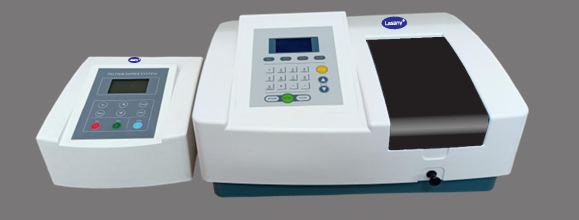
Tell us about your requirement

Price:
Quantity
Select Unit
- 50
- 100
- 200
- 250
- 500
- 1000+
Additional detail
Mobile number
Email

More Products in SPECTROPHOTOMETER Category
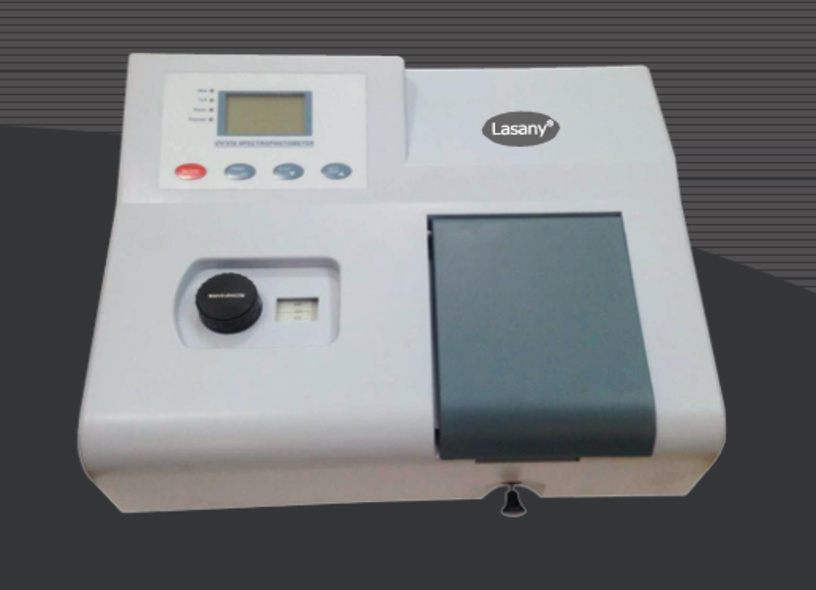
Single Beam Microprocessor UV-VIS Spectrophotometer LI-285
Price 115000 INR / Unit
Minimum Order Quantity : 10 Units
Warranty : 1 Year Warranty
Shape : Rectangular Benchtop
Power Supply : 20240 Volt
Application : Industrial, Laboratory, Clinical, and Research environments
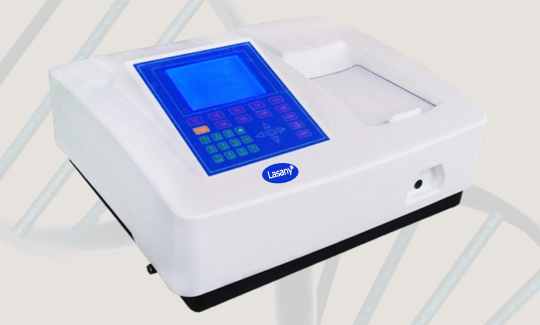
Double Beam UV-VIS Spectrophotometer LI-2800 EX
Price 425000 INR / Unit
Minimum Order Quantity : 10 Units
Warranty : 1 Year Warranty
Shape : rectangle shape
Power Supply : AC 90250V 50/60Hz
Application : Pharmaceutical Analysis: Used for drug potency testing, purity analysis, and dissolution studies to meet USP/BP pharmacopeia standards.
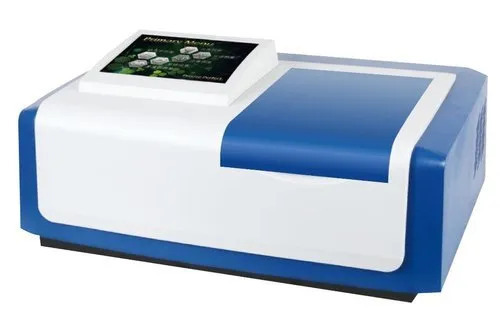
Double Beam MICROPROCESSOR UV-VIS TOUCH SCREEN Spectrophotometer
Price 379000 INR / Unit
Minimum Order Quantity : 10 Units
Warranty : 1 YEAR
Shape : RECTANGLE
Power Supply : 100240 V, 50/60 Hz
Application : 21 CFR
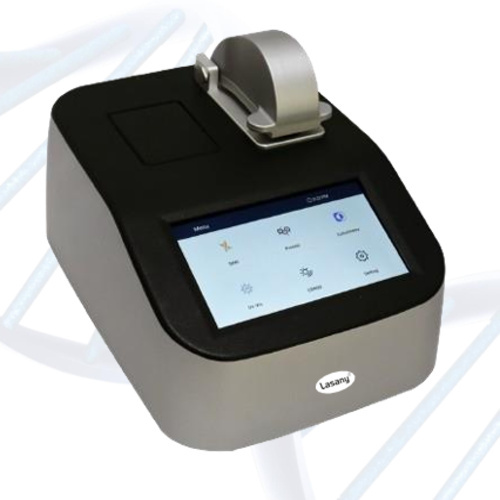
NANO SPECTROPHOTOMETER Model : LI-5210
Price 690000 INR / Unit
Minimum Order Quantity : 10 Units
Warranty : 1 Year Warranty
Shape : square
Power Supply : 24V DC / 25 W
Application : pharmaceuticalQA/QC, drugbindingassays, nanoparticleanalysis,Genomicsquantification, proteincharacterization,forensicDNAprofiling, academiclifescience, vaccinepurityverification, environmentaltoxicology

 Send Inquiry
Our Products


320, Sai Kripa Colony, Near Bombay Hospital,Indore - 452010, Madhya Pradesh, India

Mrs. Harsha Chitambare
(Co Director)
Mobile :07971191476
 Send Inquiry
 Send SMS
 Call Me Free
Developed and Managed by Infocom Network Private Limited.
 English
 Spanish
 French
 German
 Italian
 Chinese (Simplified)
 Japanese
 Korean
 Arabic
 Portuguese